Conserving High Atlas agrobiodiversity to improve Amazigh livelihoods in Morocco
Key Facts
FUNDING SCHEME Main Project
VALUE £362,686
WHERE Morocco
Summary
Erosion of traditional agricultural knowledge, adaptive local practices and plant genetic resources negatively impacts High Atlas agroecosystems that sustain a biodiversity hotspot and community livelihoods. We assist local Amazigh farmers in rural communes to improve conservation, agricultural productivity and livelihoods benefits of five locally important, genetically diverse crops. Our project cycles through phases of agrobiodiversity assessment and ex-situ conservation; on-farm selection and sustainable cultivation of promising crop varieties; knowledge exchange, seed sharing, product innovation and commercialisation; and national policy support.
Slow Food, Imdoukal Znaga Cooperative, European Delegation for Family Farming in Latin America, Asia and Africa (DEAFAL), Moroccan Biodiversity and Livelihoods Association (MBLA), Cagliari Botanical Gardens, International Centre for Agriculture in the Dry Lands (ICARDA) - Morocco, Institut Agronomique et Vétérinaire Hassan II, Rabat, Association Ait Lekak, Terre et Humanisme Maroc, Cadi Ayyad University - Ecology, National Institute for Agricultural Research, Moroco (INRA), Federation for the Democratic League of Women’s Rights, Aska Cooperative for Women and Children, Network for Agroecological Initiatives
Darwin Initiative Round 32 is now open for applications! A new round of funding to support ambitious projects delivering impact for biodiversity and communities.
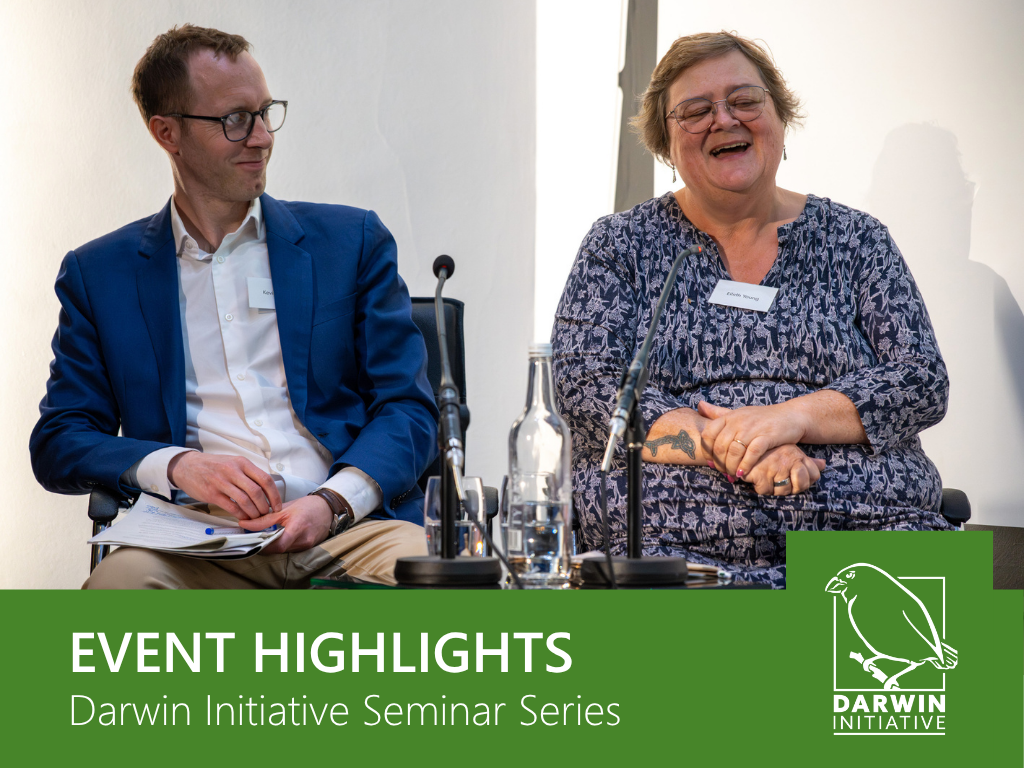
From scaling successful approaches to strengthening locally led conservation, explore key lessons shared by projects working on the front line of biodiversity action.